ABOUT ME:
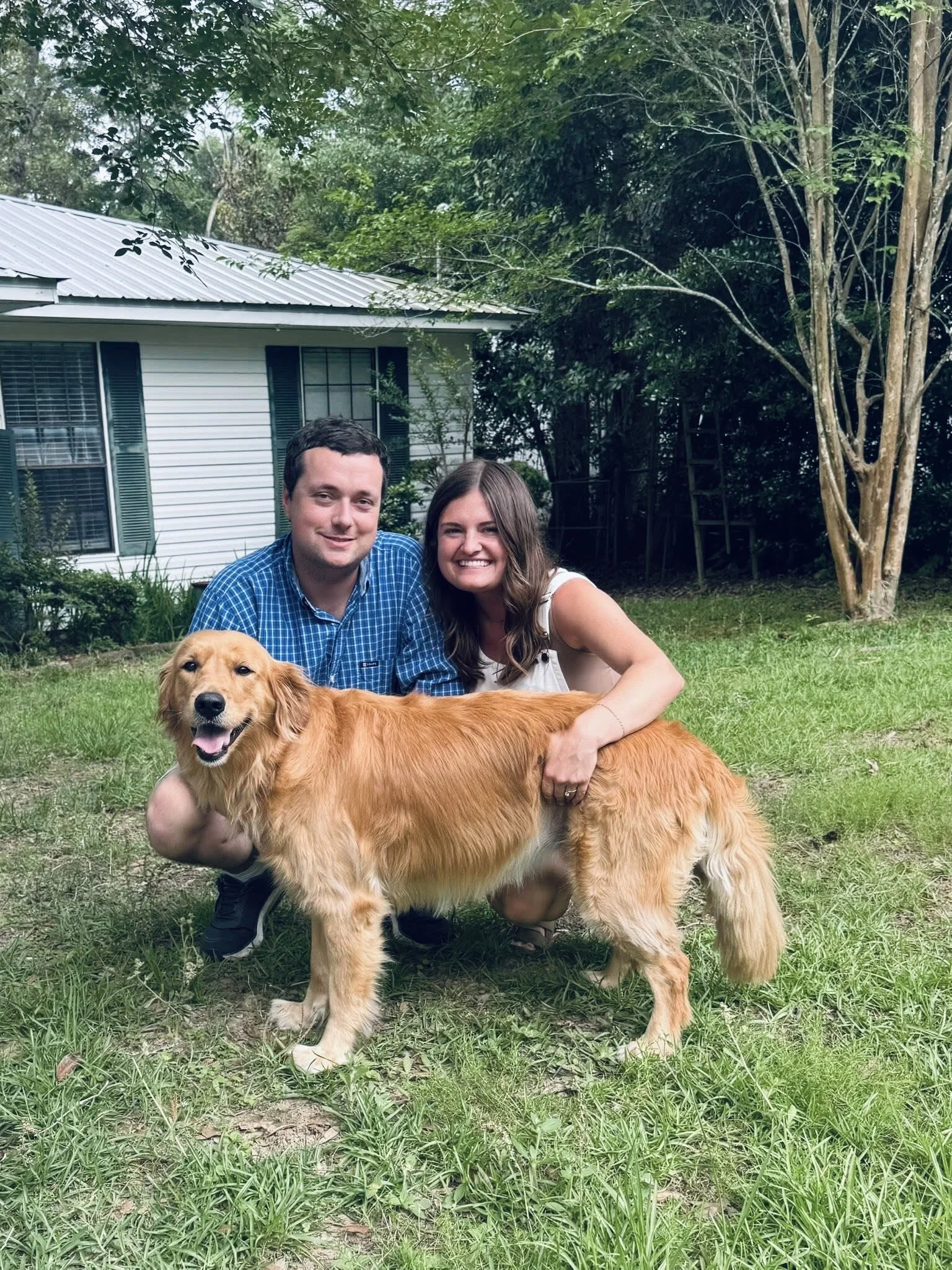
I grew up in Spanish Fort and currently live in Fairhope with my wife, Meri Blake, the hardest working speech language pathologist I know this side of the Mississippi, and our dog, Remi. I am from Spanish Fort and got my undergraduate degree in History from Auburn University. I then went to Ole Miss for law school, graduating in 2020. After law school, I worked as an OFAC Officer and AML Investigator in Texas and North Carolina. If you google those careers, you may imagine a globetrotting Bond-esque life, but 90% of the job involved sitting behind a desk. These days, I much prefer courtroom antics to the cubicle water-cooler.
In 2023 I moved back to my hometown to practice law and to be closer to family. Since then, I have handled cases all throughout Lower Alabama, representing clients in family law, criminal defense, landlord-tenant disputes, debt defense, general civil litigation, and appellate matters. I am a member of both the Baldwin County Bar Association and the Mobile Bar Association.
A little-known piece of history that first sparked my interest in the law is the story of a young lawyer in Colonial Virginia who was retained to represent a local physician asking the King of Great Britain and Ireland (yes, in 1772 you still actually technically needed his permission even in Virginia) a divorce against his wife for adultery. Keep in mind this is hundreds of years before the concept of a “no-fault divorce” even enters the legal lexicon. By modern standards, the request hardly seems extraordinary. But in 18th century Virginia, it presented a formidable challenge: in the 165 years since Virginia was founded, not a single divorce had been granted. And still today people like to think our divorce judges are tough……
Sure, the standards are a bit lower today to get a adultery based divorce but it can still be somewhat difficult even with such modern luxuries as subpoenaing phone records or credit card statements to convince the Court there is enough circumstantial evidence to lead the much lauded “reasonable and just person” to the clear conclusion that adultery occurred. See Gardner v. Gardner, 248 Ala. 508 (Ala. 1947). But back in those early days you had to actually catch someone in the physical act. And then it had to be testified to by two witnesses. Luckily no longer is a peeping tom needed to act as a witness (now we just call them PI’s).
Understanding the difficult task before him, the young man locked himself in his law library and dove into the philosophy and legal theories underlying divorce. Realizing that establishing adultery would prove difficult, he began developing an alternative strategy: persuading the Virginia legislature to establish new precedent permitting divorce on broader grounds. His research included philosophical and scriptural arguments supporting divorce based on incompatibility, as well as extensive consideration of the justifiable grounds for separation, the consequences of preserving an abusive marriage, and other circumstances that might warrant dissolving the marital bond. Remarkably, these are the same questions people still wrestle with today.
The case quickly became the talk of the town: it seemed like he just might succeed in securing a result that no Virginia lawyer had ever done before. Unfortunately, just as he was finalizing his evidence and arguments, his client died approximately one month before trial, bringing the sensational case to an anti-climatic ending. See Blair v. Blair (Va. Gen. Ct. Nov. 1773).
There are two historical lessons here: never underestimate a young attorney, and never underestimate how long it can take to get a case to trial! That young lawyer, by the way, was none other than Thomas Jefferson.
But enough about Jefferson. I make no claims to his place in legal history, but I have had a few notable successes of my own before the Alabama Court of Civil Appeals. These include obtaining a writ of mandamus that resulted in the reversal of a trial court’s order and ultimately paved the way for a favorable divorce decree for my client. I have also successfully defended appeals challenging awards of sole physical custody to my clients, as well as an appeal challenging a fault-based divorce decree entered on the grounds of cruelty, a rarely affirmed ground for divorce under Alabama law.
But regardless of the case, my philosophy remains the same. As Ernest Hemingway wrote, “Never confuse movement with action.” I believe in being deliberate with my time and effort, focusing on what actually moves a client’s case forward rather than getting bogged down in busywork. I work hard to help my clients through what are often some of the most difficult times in their lives, and I am proud to say that my clients very often recommend me to family and friends because they trust me and they like me.
“Nothing gives one person so much advantage over another as to remain always cool and unruffled under all circumstances.” - Thomas Jefferson